A
Anonymous05/14/26, 19:45No.16976159Microplastics overhyped
>In this work, we illustrate that dry surface contact with nitrile and latex laboratory gloves can cause overestimations of microplastics (mean 2000 false positives per mm2) when using traditional library matching approaches. We recommend a nitrile cleanroom glove (mean 100 false positives per mm2) to reduce contamination.
https://pubs.rsc.org/en/content/articlelanding/2026/ay/d5ay01801c
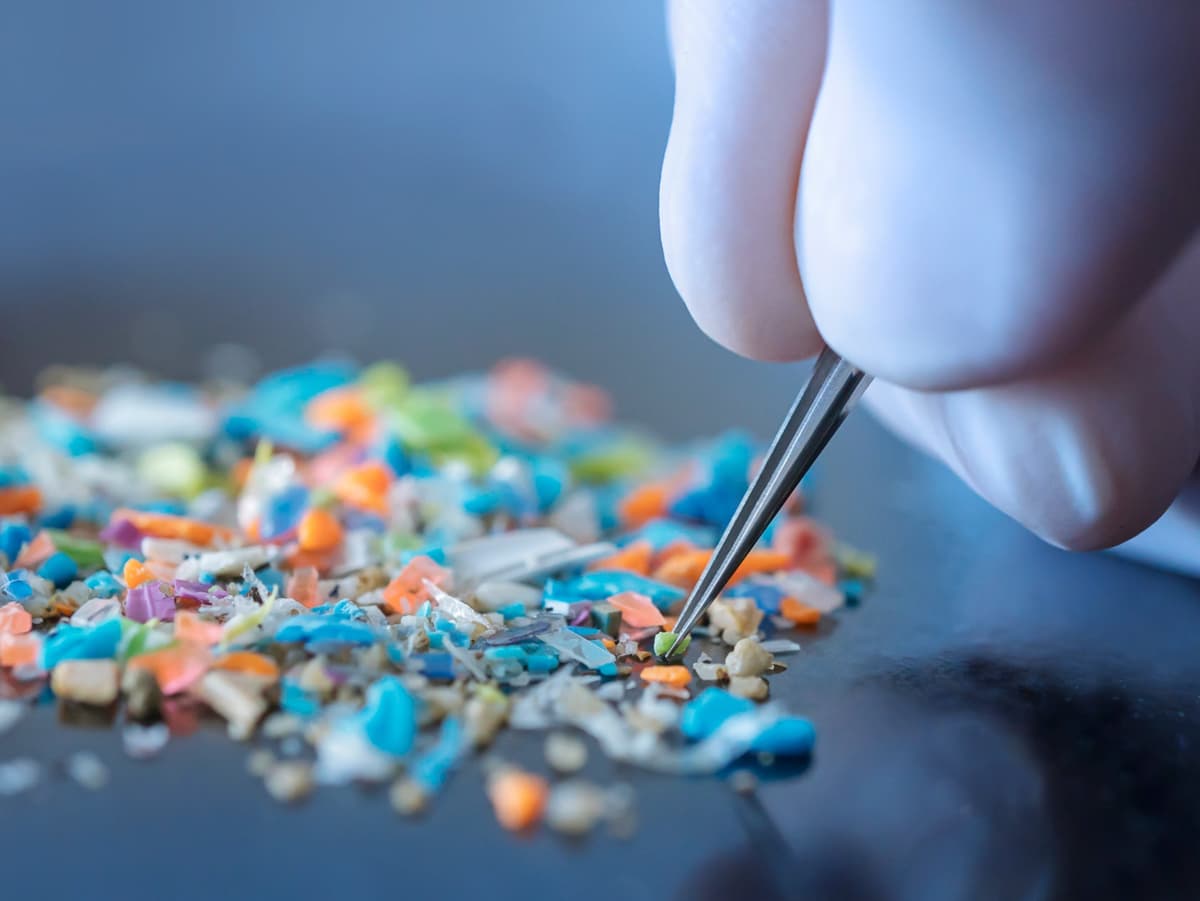
Concentrations of microplastics in bottled water that were found to be high were actually less than the procedural contamination by the lab tests. Almost all lab tests involving microplastics up to now have the same problem with contaminated blanks and introduction of contamination into samples through handling with gloves. Lesson learned: don't suck on gloves.
6
Replies
A
Anon05/14/26, 20:18No.16976181
Big if true, because it means we have to bring back leaded gasoline and leaded paints to maintain cognitive impairment of the general populace.
A
Anon05/14/26, 20:45No.16976188
Fake news by tranny scientists to push the agenda of the industrial petrochemical complex.
A
Anon05/15/26, 06:02No.16976359
https://www.bfr.bund.de/en/notification/microplastics-in-the-brain/
>It is particularly important to note that all tissues removed during the autopsy came into contact with plastic
>In addition, all organs were cut with scalpels on plastic boards made of PE for storage until examination and then stored in plastic containers filled with formalin
>PE was identified as the main component of the plastic fraction in all tissues examined
>Here, several pyrolysis fragments are normally used for each polymer. These fragments break down again in the mass spectrometer into several fragment ions, the frequency (intensity) of which can be used to determine the concentration of the polymer. In order to rule out the possibility that signals of other, non-polymeric compounds (in the case of PE, these are, for example, the alkyl chains of fatty acid residues) overlap with these signals, they should occur in certain ratios.
>Although pyrolysis fragments and ions are named in the publication for the identification and quantification of the respective polymers, it is not clear which specific ions were used for the important quantification, nor what the ratio of the signals to each other is. Thus, interference from non-polymeric components and a significant overestimation of the polymer content cannot be ruled out.
A
Anon05/15/26, 06:18No.16976363
AHHHHHHHHHHHHH I'M BEING ATTACKED BY MICROPLASTICS!!!!!!!! AHHHHHHHHHHHHHJHH!!!!!!!!
https://m.youtube.com/watch?v=hKdfReE0qds&ra=m
